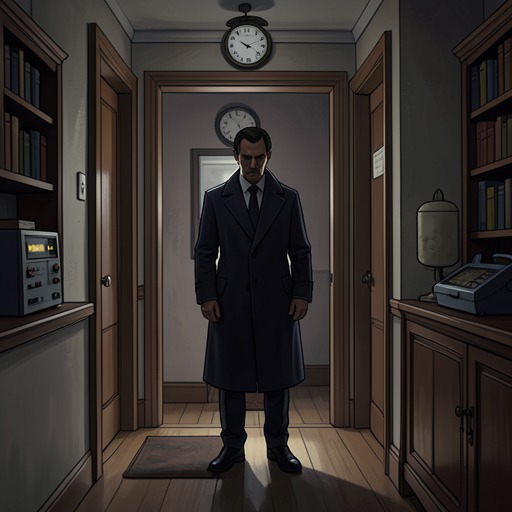
Thomas Higgs’s disappearance and identification
Hans Brinker, or The Silver SkatesThomas Higgs’s disappearance and identification turn an obscure English alias into the link between Raff Brinker’s recovered memory and Dr. Boekman’s long-lost son, Laurens Boekman. The discovery begins with a name Raff can scarcely hold onto, gains a place through a skating case made in Birmingham, and sends the doctor hurrying to find the young Englishman before the clue fades again.
The Name and the Clue
At the Brinker cottage, Raff repeats the name Thomas Higgs under his breath, recognizing it but unable to remember the place associated with it. The name is fragile: he describes it as if it has returned suddenly and forcefully, yet might slip away at any moment. His son Hans has written it down, preserving the fragment that Raff’s memory cannot keep secure.
The immediate occasion for the recognition is Gretel’s skating case, an elegant crimson-morocco box ornamented with silver and lined with velvet. Its cover bears the words For the Fleetest, while the maker’s name and address are stamped in a corner. Gretel examines it carefully and identifies the maker as being in Birmingham. The object, presented as a prize-related possession, thus becomes an accidental piece of evidence linking the Brinker family’s domestic scene to a distant English town.
Peter van Holp leans over to read the initials on the case. After first making out T.H., he deciphers them as Thomas Higgs. The name now has both a physical clue and a remembered connection behind it: the case points to Birmingham, and Raff recognizes Higgs. Peter turns to Hans, but the response around him is startling. Raff and Hans spring up in glad amazement, Gretel looks wild, and Dame Brinker rushes about with an unlighted candle, searching for Hans’s hat and urging him to leave for Amsterdam. The family’s excitement makes clear that the name is not an incidental discovery; they believe it identifies someone they have reason to seek.
The Disappearance in Birmingham
The narrative then sets out the mystery that has grown around Higgs in Birmingham. He arrived there years earlier as an eighteen-year-old, learned his trade faithfully, and gained his employer’s confidence. In time he became a partner; after the older owner died, Higgs took over the business. The town knew this outline of his working life, but little else about his origins or private history.
His small factory made leather goods, including pocketbooks and telescope cases. Benjamin Dobbs says it stood fewer than four miles from his home and recalls Higgs as a reserved, solemn-looking man with striking eyes, not readily recognizable as English. Higgs had once made Benjamin a beautiful writing case to give Jenny for her birthday. The remembered craftsmanship links him to the same kind of finely made object that has now carried his name into the Brinker cottage.
Higgs’s nationality had long been a subject of local speculation. His English name seemed to settle only one side of the question; gossipers guessed at his mother’s origins and tried to read his appearance, speech, and habits as evidence. Though he listened closely when Holland was mentioned, he seemed unable to answer questions about the country. No letters arrived from his mother’s family there, and no one living had seen the older Higgs. The townspeople treated these gaps not as reasons to suspend judgment but as material for conjecture, making Higgs and his affairs a constant topic of conversation.
The sudden departure gives that speculation a dramatic new focus. According to the report circulating in Birmingham, a postboy delivers Higgs a foreign-looking letter. Higgs turns white, hurries to his factory, speaks briefly with one of the senior workmen, and leaves with his belongings without saying goodbye. The episode supplies a concrete trigger for the disappearance but does not reveal the letter’s contents. Its significance lies in the abrupt change: a man whose habits and origins had been endlessly discussed vanishes at once, apparently in response to news from abroad.
His landlady, Mistress Scrubbs, laments that he left without the warning she believes a lodger owed her, or even a farewell thanking her for her past kindness. Yet her account also complicates the grievance: Higgs paid everything he owed to the last farthing. He left behind his empty boots, which she notes had been kept upright and had been resoled twice. The boots remain in his room while he has gone, a small, concrete remnant that turns his sudden absence into something the household can point to. Mistress Scrubbs’s friend carries the story onward, and the neighborhood quickly spins it into a widening web of rumor.
Recognition and the Search
Back in the Netherlands, Dr. Boekman hears the account and asks whether the man is in England. Benjamin’s description of the Birmingham factory gives the name a location, and Dame Brinker explains how to recognize the young Englishman: he is with Peter van Holp, has hair curling over his forehead, and speaks rapidly in English. The doctor has already prepared to leave, but Raff urges him to speak to the young man before he forgets Thomas Higgs again. The recovered name is therefore both revelation and emergency: it opens a path, but Raff fears the memory may not last.
Dr. Boekman understands Higgs to be the English name his son has used. He beams at the thought that the young man would choose such a rascally English alias, calls Hans his son in his excitement, and hurries out of the cottage. The name resolves the central identity mystery: Thomas Higgs, the reserved Birmingham leatherworker who disappeared after receiving a foreign letter, is Laurens Boekman, the son his father had thought dead. The doctor’s departure converts recognition into action, with Hans accompanying him as he goes to look for the Englishman.
Rumor, Memory, and Consequence
Birmingham’s reaction to Higgs’s flight contrasts with the family’s response to his name. In the town, strangers’ guesses and a landlady’s indignation turn an unexplained departure into public entertainment. An investigating committee gathers secretly over Mrs. Snigham’s best china, ostensibly for tea, but spends so long debating Higgs that the biscuits grow cold and no one receives a second cup until nearly eight. Its members are eager to establish that they had always known something extraordinary would happen to him. Their confidence comes after the event; it is part of the gossip that the disappearance generates, not evidence that anyone understood the cause.
The event’s meaning changes when the scattered details meet. A foreign-looking letter explains the timing of Higgs’s departure but leaves its contents unknown; the Birmingham address places the alias within reach; Raff’s returning memory connects that alias to the Brinker family’s past; and Dr. Boekman’s recognition turns a town mystery into a family search. The clue does not initially restore all that has been lost. It supplies a name, a place, and a chance to find Laurens Boekman while the people who recognize him can still act.